Checking back in with Pokemon Y and my team of monsters

pokemon y checkin

For the last few weeks, it’s been a mini-game of swap city on my Nintendo 3DS. I’ll play a little bit of Animal Crossing: New Leaf before bed, take the cartridge out, pop in Pokemon Y, and play a little bit of that. Eventually, I’ll remember that I have a loan to pay off and quite an important job to do as mayor of Arni, and so the cycle returns to where it started. It’s not the worst problem in the world, but I am beginning to see the benefits of owning digital copies of these large portable games as, strangely, I find removing carts from the 3DS to be a troublesome process. In my mind, it’s as laborious as lifting boulders over your head. One day, I’ll have to look deeper at this quirk of mine.

When last I talked about Pokemon Y here on Grinding Down, I had played maybe about five hours. That meant starting out slow and perfunctory as has been the case in all previous Pokemon game romps I’ve experienced, taking care of the first gym and doing some story-related stuff that blocked forward progress. Truthfully, it mostly involved wandering around tall grass and collecting as many fun-looking pocket monsters as I could with my limited amount of money and Pokeballs, as that Pokedex simply won’t fill itself out. The jerk.

But now I’ve played for a total of fifteen hours and have gotten the chance to see the Kalos region a bit more. Okay, okay–fifteen hours and seven minutes, for those that must really know. After kicking the butts of four gym leaders and earning their respective badges, as well as providing a swift beatdown to Team Flare to get the power back on in Lumiose City, my team looks like so:

  • Delphox, LV 45 – nicknamed Fenny
  • Talonflame, LV. 43 – nicknamed Flit
  • Blastoise, LV 42 – nicknamed Urtle
  • Roselia, LV. 41 – nicknamed Rosebud

There are two other spots on my team that are, for lack of a better way to say it, temporarily filled. I couldn’t even tell you what two Pokemon are there–as they don’t matter. They are just there to fill the gaps just in case and gain some EXP after battles thanks to the new rules of EXP Share. However, I do hope before the end-game fights start to find better replacements. I’m most definitely, no doubt in all the galaxy, saving a spot for a Garbodor, but the other slot is open territory. I guess I probably need to pick a Fairy-type Pokemon soon and stick with it, as I’m sure a Dragon-based gym is on the horizon, but I don’t have one that I really like just yet. Please suggest something other than Jigglypuff.

I don’t know if the gyms have been designed to feature easier progress-blocking Trainers with fewer challenging Pokemon to throw at you or if I’m a lot better at Pokemon Y than I originally thought, but it’s been smooth sailing since Day 1. I’ve not died once yet, and maybe that means my team is a bit overpowered. My starter Delphox is ferocious, able to wipe an opponent out in a single breath (of fire). Should they all be more around LV 35-37? Well, you can blame the EXP Share for that then, as it helps keep everyone growing, everyone improving. But yeah, it’s been extremely easy, which makes for a very lax gaming experience. I’m not terribly bothered by this, as I found Pokemon Black 2 to be pretty difficult and off-putting in its later half, and maybe Pokemon Y will get there too, though I kind of doubt it. This is the game Nintendo needed to sell a lot of 2DS and 3DS systems, and no one likes a game too difficult to play, unless you’re a sicko and into things like Dark Souls.

So, I’m about halfway through Pokemon Y‘s main story stuff, but after all that is dead and done this might be the first game in the franchise I spend some solid time tracking down all the collectible Pokemon. Granted, I like to think that about each iteration I play, and it never seems to pan out in the end. However, it really helps seeing them in 3D models even if by then I’ll never use them or battle against strangers online. Though I do need to try this Wonder Trade thing out sometime soon. Maybe I can pick up a cool ‘mon to fill that sixth slot void.

Mixing items with items to make more items in Ni no Kuni

ni-no-kuni alchemy pot update

Of all the videogame-based alchemy systems, I can confidently say that I like the one in Ni no Kuni: Wrath of the White Witch the least. Which is a shame, as Level-5 generally knows what its doing with its item synthesizing mechanics, a gameplay element that warms me greatly. Seriously, I love it. You take one item, mix it with another, and get something–more often than not–greater than the sum of its parts. My feverish appreciation probably all dates back to mixing herbs together for stronger health potions in Resident Evil 2, but if a game has any kind of alchemy element, I’m in. Heck, I bought Atelier Iris 2: The Azoth of Destiny solely on this reasoning, even though its very name scares the life out of me and I’ve not played it yet.

In Dragon Quest VIII and Dragon Quest IX, you have a magical pot for all your brewing needs. In the former, it travels with you, riding on the princess-drawn carriage with her goblin father. In the latter, it stays put at the Quester’s Rest inn, which you must visit to do your mixing thing. Either way, you put items together and hope for the best, or you can pick up recipes (or clues) along your journey for killer gear. In VIII, you had to wait a bit for the pot to create the item–maybe about ten or fifteen minutes–which made grinding more bearable, as you battled for XP while waiting to hear that salivating ding that indicated your item was done. They took this away for IX, probably because it was on the DS and meant to be played in short, portable bursts, so waiting was not an option.

In Rogue Galaxy, you have two different ways to create new items: Weapon Fusion and the Factory. Basically, all weapons gain XP from battle until they are maxed out, wherein they can then be synthesized along with a similar weapon to create something new. Toady, a strange frog monster, helps with this by swallowing both weapons and spitting out something new; one could argue it is an alchemy pot. However, you don’t really know if something is going to turn out great and just have to chance it, though Toady will also warn you if the results are really negative. For the Factory, it’s more of a puzzle system, where you have to line up machine parts to get it running properly to create a special item from a set of blueprints.

For non-Level-5 joints with alchemy-based systems, it’s a mixed bag, with most alchemy systems fairly uninteresting or just bad altogether.

Odin Sphere has the player combining two items to generate a new item during gameplay, which is then stored in a “Material” bottle. These bottles can be improved as well by alchemizing two of them together to get a material bottle valued at the multiplicative product of the two original bottles (e.g., Material 2 combined with Material 3 results in a Material 6 bottle). It’s a bit complicated, and I don’t even remember getting to it during my first hour with the game, and I’ve not gone back since. I remember more about various plants you grow during battle than the alchemy, which says a lot, I guess.

And then there’s Kingdoms of Amalur: Reckoning, Elder Scrolls V: Skyrim, and Dragon’s Dogma: Dark Arisen, all of which with systems that are nothing more than perfunctory.

However, in Ni no Kuni, the alchemy system is unnecessarily clunky. You have two options once you obtain the alchemy pot and its genie master Al-Khemi in Castaway Cove: use a recipe or mix and match. If you have all the right ingredients, simply click “use a recipe” and Al-Khemi with automatically take care of it for you. For mixing and matching, you are either guessing or looking up the select few recipes available in your Wizard’s Tome, a tedious process that involves you backing out of the alchemy menu, into the tome menu, zooming down on the page for alchemy, zooming in more to find the recipe you want, mumble it to yourself a few times so you don’t forget, exiting back out to the main menu, back into the alchemy menu, and trying to create something based off of what you were mumbling to yourself.

The sad part of all that? Even if you are successful and create an item, the recipe does not appear in your list of “acquired” recipes; you can only get ones added there from completing errands or earning ’em as the story progresses. That means, even though I successfully made a Fishburger from White Bread (x2), a Dumbflounder, and Crispy Lettuce, I can’t quickly select it again down the line from my recipes list; I have to either remember how to do it from scratch or go back into my tome to remind myself of what is actually in a Fishburger. In short–I really don’t like this. All it means is that I now have to play Ni on Kuni with my laptop next to me open to some recipe wiki page, instead of staying immersed in the game.

What a bummer. At this point, I’d rather just have a repeat of Dragon Quest IX‘s system.

A slow, torturous train ride to nowhere in Sepulchre

sepulchre final thoughts copy

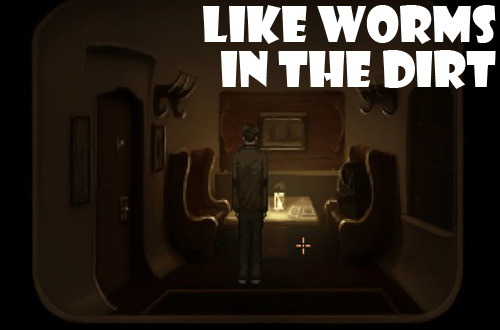
If you know the definition of sepulchre, then you know how Sepulchre will play out after its first few opening moments. Regardless of that, it’s still an effective and enjoyable slice of old-fashioned horror, a playable short story that is all about tension and creating an unsettling atmosphere rather than having you run from some ghoulish monster, your heavy breathing the only soundtrack to carry you to some kind of momentary safety. It’s a slow, torturous ride, and  greater for it.

The story is as follows: you play as Dr. Harold Lang, a short-tempered museum curator low on primary memory aboard a moving train on its way to Augur Peak Island. He’d like some food and a drink before reaching his destination, and so he leaves his book and room, off on a mighty quest, only to discover that things–and people–are not exactly right on this train. It’s very hard to say much more without spoiling what unfolds, but let’s just say that you’ll talk to some characters, specifically a bartender and an attendant named Don, solve a few straightforward puzzles, and grow worrisome as the truth becomes clearer with each click of your mouse.

I’ve read elsewhere that the amateurish voice acting lessened the experience in Sepulchre; for me, it was just the opposite. Plus, I’m a sucker for anyone–or anything–with a Scottish accent. Sure, the bartender’s audio was noticeably lower than Lang’s, and there’s an airiness to everything spoken, but I felt that helped build immersion. When you learn the game-ending twist, the tinny voice recordings and distant feeling throughout maybe makes more sense. I also liked how naturally everyone spoke; it never came across as actors reading lines from a script, especially Don and Lang who, occasionally, had to talk to himself, to work things out. Yes, even Ben Chandler’s performance as the mumbling Grub is worth appreciating.

However, I will admit that Sepulchre does have some problems. Due to the limited number of screens making up the train Lang is stuck on, there’s a lot of walking from one side back to the other. It can feel a little tedious. The sound effect that plays when going to your inventory is a very loud thunk and was jarring each and every time I popped in there to see what Lang was holding. Some elements are maybe a bit too vague, such as the main painting and the name Lang says at the very end. Also: didn’t get whatever joke was hiding behind the “huge bags” though they were effectively creepy.

For awhile there, I thought there was going to be some strong revelation based around… dogs. The theme is pretty prominent–the bartender, after Dr. Lang gets verbally upset, tells him to let it out like “a good little puppy”; you find origami dogs in one passenger cart and give it to Grub, admitting it is not exactly man’s best friend, but should do just fine; there’s also a non-interactive painting on the wall of what looks like a small dog. Alas, nothing came of all this, but it was something I noticed nonetheless.

Sepulchre comes from Owl Cave and is written by Ashton Raze (Richard & Alice), with artwork by point-and-click connoisseur Ben Chandler (upcoming The Blackwell Epiphany and ^_^). You can play for totally zero dollars by downloading it from Owl Cave’s website, but you can also pick up a special edition for $2.99, which includes the soundtrack and some other extras. If you have a half hour to kill and want to lose yourself on an unnerving train ride, I highly recommend taking this short, but puzzling trip.

2013 Game Review Haiku, #38 – Sepulchre

2013 games completed Sepulchre-2 copy

Cannae stop this train
For Dr. Lang is hungry
Wants answers, not worms

These little haikus proved to be quite popular in 2012, so I’m gonna keep them going for another year. Or until I get bored with them. Whatever comes first. If you want to read more words about these games that I’m beating, just search around on Grinding Down. I’m sure I’ve talked about them here or there at some point. Anyways, enjoy my videogamey take on Japanese poetry.

Having trouble surveying the score in Grand Theft Auto V

gta v stuck vanilla unicorn mission glitch

I slip back into Grand Theft Auto V every now and then to drive around aimlessly, look at a few jokey billboards and websites on the game’s internal Internet, and do a main story mission or, at the very least, a random event. Truthfully, I’m always on the lookout for a new Strangers and Freaks mission, really zany one-offs, but they seem few and far between these days, especially since I’m maybe now halfway through the story. I don’t know. It’s hard to tell without looking up online and spoiling myself percentage-wise, so we’ll just pretend like I know what I’m talking about and say that GTA V‘s glass is currently half empty. Or half full. Whatever.

As much as I hate glitches, especially ones that bring a gaming session to a halt, such as Half-Life 2‘s Nova Prospekt level and the randomly spawning Alpha Male Deathclaw in Fallout: New Vegas, I still do find them fascinating pieces of broken tech and marvel at what they can do to a system, both visibly and behind the scenes. So far, throughout my decent amount of time with Grand Theft Auto V, I’ve not come across many, and if I did, they were pretty minor stuff, like a pedestrian getting caught in a walking animation against a wall or being unable to switch characters for seemingly no good reason. Nothing game-breaking, and so I continued to carry on, little by little. Please note that I’m not including my troublesome time in the early days of Grand Theft Auto Online in this analysis, which was a hot mess of server problems, but also some strange connectivity glitches.

While Giant Bomb streamed for 48 hours over the weekend to raise money for Extra Life, I tried to do my part at home as well, staying up with them and playing some games. Granted, I didn’t last terribly long, but I tried to keep things fresh, jumping between my Nintendo 3DS, Batman: Arkham Asylum, Ni no Kuni, and, our topic du jour, Grand Theft Auto V. I haven’t really played in a couple of weeks from the look of things, and as far as I can tell, the next main story mission is called “Surveying the Score,” which involves all three of our colorful characters–Trevor, Franklin, and Michael. It’s basically a reconnaissance mission, there for the characters to observe their next target, the Union Depository, and plan how to strike it based on the number of guards they see and its alarm system. That’s all well and good, but I can’t seem to start the mission, and the one time I did, my game glitched hard, with Franklin literally standing inside the car, unable to leave, unable to switch out over to Trevor or Michael.

Basically, you have to go to the Vanilla Unicorn, which Trevor owns, and find him in the back office to kick things off. However, something is seriously wrong in my game. The outside door that supposedly leads directly to the back office is locked, and I don’t think that’s right. If you try to go through the strip club, body guards will chance you when you cross into the back room area, and they shoot to kill. I died three times trying attempting this, but was once able to reach Trevor’s office to begin “Surveying the Score”–with body guards still in tow. I think that had a serious effect on the mission going forward, the system confusing itself, which led to Franklin stuck in the car, kind of clipping out of it, but unable to do much else. Grrr.

I turned on the DownloadStation 3 this morning to snatch up my free copy of Dragon’s Dogma: Dark Arisen and noticed that there was a new patch available for Grand Theft Auto V. Alas, I think that’s mostly for Grand Theft Auto Online stuff, but maybe there’s a Vanilla Unicorn fix in there, too. We’ll see. I’ll keep playing until I run out of other missions on the map to do, and then I’ll try again; if I can’t get through Trevor’s strip club unscathed, I guess my dream of completing a GTA game for the very first time ever will come to a sad, but inevitable conclusion.

Persist, a backwards platformer with spirit

persist final impressions image copy

First you lose your arms, stripping away your ability to swim. Next, the Goddess takes your legs, leaving you as a simple head, only able to roll left or right, deeper down into a dark abyss. And she doesn’t stop there either, relishing in your torture. Persist is a backwards kind of platformer; basically, the further you get, the more standard abilities you lose, reducing you down to nearly nothing, and as the story plays out, it sort of makes some sense why such a being would do this. Don’t be deceived by the game’s retro look and minimalist gameplay–it was designed that way for a reason, and it is totally worth playing.

Again, Persist follows the story of a lone spirit, trying to reach a mysterious Goddess to ask for forgiveness for his past sins so he can ascend to the higher plane of existence. Unfortunately, this Goddess really resents him, which becomes somewhat clearer by the end, and constantly puts him into increasingly dangerous situations, both as a test and a bit of torture. This game was created in just under 48 hours by @AdventIslands for Ludum Dare 26, wherein the theme was minimalism. A couple of other games to come out of that jam that I talked about here on Grinding Down were TOOM and Gods Will Be Watching. It’s absolutely awesome how much can be crafted from the idea of “how little,” and I suspect I’ll keep finding little gems from this jam as time marches on.

For those interested, I played a bit of Persist in my new speculative YouTube adventure called Paul Plays…, and you can check out my lackluster jumping skills in the video below:


I did immediately keep playing after the video ends, as there were only two sections left to complete, the one where you’re just a detached head and another that I won’t spoil here. They are very enjoyable and more puzzle-based than everything before it, which is more classic platforming of the Mario kind. The story comes to a head immediately after the last level, and it takes a surprising turn, but it really could have been something more if the writing was stronger and more effectively narrated throughout. I understand that there was a time limit to abide by, but I’d love to have seen a few more levels added or lengthened to stretch Persist out, especially when you’re just a head, as figuring out how to time your rolls from platform to platform was a lot of fun. The small amount of music in the game is quite good; not loud enough to be distracting, but soft enough to jump against, and helps create a rather somber ambiance, which is quite fitting once you learn what the spirit did.

Either way, give Persist a play, and do it sooner than later or else the Goddess might take away your hands, and you’ll have to give up gaming entirely.

2013 Game Review Haiku, #37 – Persist

2013 games completed persist

Must find the Goddess
To make amends, who needs arms
Legs, eyes, a lost soul

These little haikus proved to be quite popular in 2012, so I’m gonna keep them going for another year. Or until I get bored with them. Whatever comes first. If you want to read more words about these games that I’m beating, just search around on Grinding Down. I’m sure I’ve talked about them here or there at some point. Anyways, enjoy my videogamey take on Japanese poetry.

Batman vs. The Joker and an army of ventilation gates

batman arkham asylum mash x to open vents copy

As you probably already know from the previous post, I beat Batman: Arkham Asylum over the weekend. It was really enjoyable and constantly full of stuff to do, even if there’s a few aspects of it that I found bothersome–more on that in a bit–and if someone had simply told me it was more or less Super Metroid plus Deus Ex: Human Revolution sooner, I would not be as late as I am to this crazy shindig. But whatevs, I did it. Not like I’m opposed to catching up on older games. But truthfully, I think I’m now good with Batman for a bit, not feeling the need to bat-glide right over to Arkham City or Arkham Origins. Though maybe that 3DS game has potential…

At the time of kicking The Joker’s clownish ass back behind bars and completing the game proper, my final stats were as follows:

  • Challenges – 2%
  • Riddles – 142/240
  • Upgrades – 18/20
  • Character Bios – 31/42
  • Completed – 73%

Not bad, not bad. But could be better overall. I’ve since gone back and upped all of those stats, now sitting at an 85% completion rate, with everything in the main campaign found, unlocked, and listened to. Whoop whoop, go moi. However, that means, in order to earn the remaining 15%, I have to not only finish all the challenges, which come in two forms, but also do them perfectly for all their medals. Which seems extremely difficult. In the Combat challenges, you fight against four rounds of enemies and earn points by combo-chaining attacks together, never getting hit, and using a ton of variety. In Silent Predator, you are tasked with taking out a group of enemies in a room from the main game itself, with three specific tasks to accomplish along the way. There’s a handful of each of these, and the difficulty between one and another appears to ramp up dramatically. I’ve tried a few and done simply mediocre on ’em, so I can officially wave goodbye to a 100% completion rate.

What I’m really here to talk about is how much you are required to mash the X button in Batman: Arkham Asylum. It’s ridiculous. For all his brawn and muscles and high technology, Batman still has to mash on the X button to pull open/kick out ventilation shafts, rip down glass walls, and topple The Joker off a ledge multiple times during the final fight. That latter reason, I get–truly. But everything else feels unnecessary and is quite tiring, especially when you use the upgraded Batclaw to rip open glass walls from afar, which seem to take more button presses than anything else. Throw in the notion that you’re also, sort of, mashing X a lot during combat to dodge out of the way, and well…that button is getting some seriously loving. I’m not generally opposed to these kind of mini-mash QTE festivals, but Batman uses vents a lot, certainly more than doors, and I don’t understand why it couldn’t have been a simple single button press to open the vent. Is it more interactive? Sure, but it’s badly designed and does not make me feel like a badass superhero.

If you’d like to really stave off any sliver of interest to see how Arkham City and Arkham Origins play out, just let me know if this mechanic is still there. If so, I’ll pass on the mash.

2013 Game Review Haiku, #36 – Batman: Arkham Asylum

2013 games completed 36 batman arkham asylum copy

Bats is late for the
Joker’s party, let’s just blame
Those Riddler trophies

These little haikus proved to be quite popular in 2012, so I’m gonna keep them going for another year. Or until I get bored with them. Whatever comes first. If you want to read more words about these games that I’m beating, just search around on Grinding Down. I’m sure I’ve talked about them here or there at some point. Anyways, enjoy my videogamey take on Japanese poetry.

GAMES I REGRET PARTING WITH: Star Ocean: The Second Story

games I regret parting with star ocean 2 second story

Somewhere in one of the various W.B. Mason boxes I got stacked around the house are a bunch of Prima videogame strategy guides from the PlayStation 1 era that I just couldn’t bring myself to sell at a yard sale or toss. Also, I haven’t bought a gaming guide since my teenage days, mostly because…well, the Internet. Though I still occasionally glance at them in stores and could probably see myself picking up some of the ones for my favorite games, like Fallout 3, for collecting purposes only, but I’d rather buy the game itself, play until I can’t, and look up a walkthrough online to help me past that roadblock. I mention all of this because I know, without a doubt, that I still have my guide for Star Ocean: The Second Story, though I definitely no longer have the game itself.

And Star Ocean: The Second Story was a pretty cool RPG, one that sticks out in my mind mostly for making the extra effort to bring its towns to life by giving each and every shop a unique name. For example, there’s The Hopping Penguin, Red Dragon Manor, Munchies, Counterpunch, Budabing Budaboom, Salesman in the Snow, Pellen Nor, The Grasping Hand, and so on. One would later see the same attention to world-building in games like Radiata Stories (not a surprise, since it is another tri-Ace joint) and  Elder Scrolls V: Skyrim. I vaguely remember the combat being chaotic and hard to follow, the pacing a bit off and super slow in the early hours, and the strangeness that was battle sound clips being saved to the Memory Card for later listening, but whatever. Every store felt real, blueprints, employee schedules, and all, because once you give something a name, it exists more than ever before, which is why children living on farms should never grow attached to pigs. No more generic nameless store selling the same wares as the generic nameless store three towns over; truly, it was refreshing.

The story, as far as I remember, goes like this: Claude C. Kenny and Rena Lanford, a young girl living on the planet Expel, are destined to meet. After being officially made an Ensign in the Earth Federation, Claude is given his first mission under his father’s supervision, which is to survey the planet Milocinia, where a mysterious energy field appears. Claude quickly discovers a mysterious device and, despite being told to stay away, examines it more closely. Unfortunately, something happens, and he’s teleported to Expel. Here, Claude meets Rena, who mistakes him for the legendary “Hero of Light.”  She takes him back to her village, Arlia, to confer with others about what to do next. That’s all I really remember story-wise, though the two eventually leave Arlia to go to some big, fancy city called Cross, and along the way add others to their party in the search for answers and a way to get Claude back home.

What’s pretty neat in Star Ocean: The Second Story is that players have the choice of controlling Rena or Claude, and the journey will evolve differently depending on certain choices each character makes.  Another mechanic I’m fond of was “Private Actions,” which allowed the player to influence relations between the cast of characters. Basically, during one of these moments, the party temporarily splits up when visiting a town, each character going their own way to shop, visit friends and family, or otherwise relax. Pretty similar to Final Fantasy IX‘s “Active Time Events,” really–which I loved. Claude or Rena can then interact with their friends, generally leading to actions that will either get these people to like them more or less. This can have a major effect in battle—if Claude’s new best friend falls, he can receive a major combat bonus for a short time—but also determines what ending the player will see. Evidently, there are over 80 possible endings–take that, Chrono Trigger and Chrono Cross.

Unfortunately, not all shimmered and shined, and I absolutely hated the game’s combat. Which, for an RPG, is a big slice of its pie. Chalk it up as one of my least favorite battle systems ever right next to Unlimited SaGa‘s wheel of chance, and you can mostly blame badly AI-controlled party members for all the heartache. Combat can be played on three settings–Standard, Semi-active, or Full-Active. You can customize your party members to fight in a specific manner, but can’t really do much else after that except pray they heal when they need to heal and they attack when the moment is right. This may or may not happen–it was always hard to see battles unfolding, as their chaotic nature took over, with a dozen actions happening at once, and you left running around like a headless chicken.

Also, apparently there was a whole item creation and skill system–you could become a baker!–brimming with options and customization that I simply can’t remember anything about. But knowing what I later experienced in games like Rogue Galaxy and Dragon Quest IX, I know I’d absolutely eat that stuff up these days. I mean, really–who doesn’t love taking one thing, adding it to another, and walking away with something greater than the sum of its parts? Nobody–that’s who.

Star Ocean: The Second Story is most definitely a “game I regret trading in,” so if you have an extra copy laying around collecting dust, please think of me. I will gladly take it off your hands, at least to visit some of those named shops that, in my mind, are still operating today, having sales and events and being real.

GAMES I REGRET PARTING WITH is a regular feature here at Grinding Down where I reminisce about videogames I either sold or traded in when I was young and dumb. To read up on other games I parted with, follow the tag.